Contents
- Life at the Bottom
- The Road to Serfdom
- Απολογία Σωκράτους (Socrates’ Defense)
- Εγχειρίδιον (Enchiridion)
- The SaaS Playbook
- Nobody Wants to Read Your Sh*t
- The Lost City of Z
- The Creative Art
- Valuable Humans in Transit and Other Stories
- The Dream of a Ridiculous Man
- You Have Not Yet Heard Your Favourite Song

What an powerful, punchy, but ultimately incredibly depressing read. You’ll read stories of people who are stuck in a cycle of poverty, addiction and crime. Specifically, how they think, and how they justify their actions. Most importantly though, Dalrymple goes over the policies that not only enable this behaviour, but make it worse for them, from the welfare state to the criminal justice system. Don’t let the weird “underclass” title tag fool you. Give it a read.
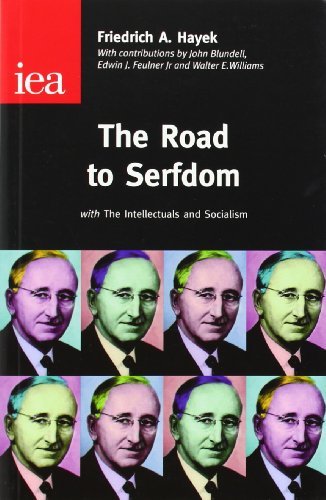
A fantastic read. In short, Hayek argues that socialism inevitably leads to totalitarianism. Policies implemented in the name of social justice or equality often end up suppressing individual freedom and concentrating power in the hands of the state. In a planned economy, the government decides what is produced, how resources are allocated, and what goals society should pursue. But who gets to do the planning? What if the bureaucrats are incompetent? What if they have their own agenda?
Hayek argues that the only way to ensure freedom and prosperity is to allow individuals to make their own choices in a free market. There’s room for government intervention, but it should be limited to enforcing contracts.
It’s a book about integrity. Socrates stood on trial, wrongly accused of corrupting the youth of Athens and not believing in the city’s gods. He was given the chance to defend himself, ask for forgiveness, and beg for mercy. Instead, he chose to stand by his beliefs and values, even if it meant death.
One of the canonical stoic texts. Some of it’s hard to digest, but it’s an excellent read. I picked it up in Ancient Greek, with a modern Greek translation that stays true to the original. I say this because every English translation I’ve seen takes a few liberties with the original and reads much more modern and “quotable”.
If you’re new to stoicism, I would also recommend A Guide to the Good Life: The Ancient Art of Stoic Joy by William B. Irvine, for a gentler introduction.
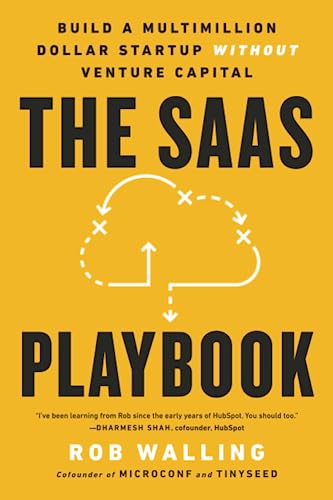
It’s such a nice read. Some chapters are exactly what I was looking for, like pricing and marketing. Generally you’ll never find a book that covers everything you need to know about starting a SaaS business, and this is no exception. It’s a good book, but it won’t build anything for you.
I’m a bit about the subtitle “Build a multimillion-dollar…”. Most of the advice makes sense for small bootstrapped startups, but it doesn’t expand on anything that Enterprise focused companies need. Sure you need to hire, and build a sales funnel, but it doesn’t go into detail about how to do that. Not that I care, but it’s a bit misleading.
Anyway, coupled with the Mom Test that’s all you need to get started. No point in reading more SaaS books, unless you’re looking for something specific.
I have a soft spot for Pressfield’s books as he wrote “Gates of Fire”, which is one of my favourite books as a young adult. The “War of Art” and this one are completely different though. I picked it up because I wanted to improve my writing, but I’ll be honest, I didn’t get much out of it for non-fiction writing.
Doesn’t matter though. It’s a very interesting read and quite motivational at times. No complaints.
This is the third book I’ve read by David Grann. It might be the weakest of the three, but it’s still a fascinating read. The bigger than life characters, like Percy Fawcett facinate me. He explored the uncharted territories of Amazon, fought a world war and went back to explore some more. Anyway as he was exploring the Amazon, he stated getting obsessed with the idea of finding the lost city of Z. He went on a quest to find it, but never returned. The author tries to trace his steps, and documents everything he could find about the expedition.
I approached this one with hesitation. I initially thought that Rick Rubin was full of BS, but then I found essays that hit the mark. It’s actually a very nice read. It’s one of these books that you keep reading for an extended period of time. There’s no reason to rush through it.

I picked this up because I couldn’t find “There’s No Antimemetics Division” anywhere in print. (For what it matters it’s sold out and a v2 will be released). It’s a collection of short stories, and some of them are pretty good. I can’t say I cared for a specific one, like I do with Ted Chiang’s stories, but they were all interesting. It’s a fun read if you like science fiction.

I’ve seen “The Dream of a Ridiculous Man” as a play, so I picked up the book at a book fair. It didn’t made the same impression as the play, but it was a good read regardless. White Nights was good as well, but didn’t really move me. I generally like Dostoevsky’s work, but these two short stories didn’t leave a mark. Maybe if I was younger, they would have.
A frustrating read. It does have some insights though if you’re curious about the music industry. Other than that, expect a lot of rambling about how socialism is amazing, why we need Universal Basic Income and how globalism is the solution to humanity’s problems. There are some other stuff that irked me, like stating that a genre is a community. Here’s an example. A moderator of a minecraft server called “Dream SNP”, made some indie music. So naturally, he argues that since his music was mostly consumed by the server’s community, it’s a new genre, and its name is Dream SNP. Don’t waste your time.